Everything You Need to Know about Buying a Home

Home. It's the most important purchase you'll ever make. As a third generation experienced agent, I understand the difference between buying a house and finding your home. Let me show you below how to make the process smooth and trouble-free.

Whether you're buying your first home or your fifth, this guide walks you through every step of the process—from getting pre-approved to receiving the keys on closing day.

The Home Buying Process

beforeyoubuy

Before You Buy

Preparation is key when purchasing a property. From down payments and mortgage prequalification to understanding the type of home that will meet your needs and satisfy your wants, I can make sure your financial ducks are in a row and your expectations are grounded in reality when preparing to buy.

thesearch

The Search

Selecting your perfect home will require research, expert guidance and knowledge of the local market, and you'll need to consider what it is you're looking for. I can help you find the place that fits your taste, your budget, and your lifestyle. I'm a home hunter's best friend.

makingthepurchase

Making the Purchase

So, you've found the perfect home that meets all your criteria, from a great location to just the right square footage. As your trusted agent, I will guide you through the logistical, and emotional challenges of the purchase process, to ensure you are in a solid position before you sign on the dotted line.

Are You Ready to Buy?

How Do I Know If I Am Ready To Buy?

Financial Readiness

Preparing your finances before beginning your home search is one of the smartest steps you can take. Not only does it improve your chances of qualifying for a mortgage, but it also helps you shop with confidence, understand your budget, and avoid unexpected surprises during the buying process. While every lender and loan program has different requirements, these are the key financial areas they'll evaluate.

Employment Stability

One of the first things a lender reviews is your employment and income history. Most lenders prefer to see at least two years of steady employment, although this doesn't necessarily mean two years with the same employer. Changing jobs is often acceptable if you've stayed in the same profession, received a promotion, or increased your income within the same field of business.

Lenders will typically verify:

  • Your current employer and position
  • Your income and whether it's consistent
  • Your employment history over the past two years to use to help you qualify
  • Additional income such as bonuses, commissions, overtime, or self-employment, child support etc. (which may require additional documentation)

The goal is to demonstrate that you have a reliable source of income and are likely to continue earning enough to comfortably make your mortgage payment.

Savings

Your savings are about much more than just the down payment. Before officially purchasing a home and moving in its important to keep in mind, you'll also need money available for:

  • Closing costs (typically 2%–5% of the purchase price)
  • Earnest money deposit (Good faith deposit)
  • Home inspection (typically between $400-$700)
  • Appraisal (typically around $500-$700)
  • Moving expenses if necessary
  • Utility deposits if needed and initial home expenses

While there's no universal savings requirement, many financial professionals recommend having enough to cover:

  • Your planned down payment
  • Closing costs
  • At least one to three months of living expenses after closing, in addition to an emergency fund if possible

Some loan programs may also require cash reserves, meaning you'll need enough money remaining in your accounts after closing day to cover several future mortgage payments. The exact reserve requirement depends on the loan program and your financial profile, but typically is around 2-3 months worth of reserves.

Credit Score

Your credit score helps lenders evaluate how you've managed debt in the past and how likely you are to repay a loan. It also plays a significant role in determining the interest rate and loan options available to you.

Although requirements vary by loan type, here's a general guideline to help get you started:

  • 740+ – Excellent credit that often qualifies for the most competitive interest rates and programs.
  • 700–739 – Very good credit with strong financing options.
  • 660–699 – Good credit that generally qualifies for many conventional loans and programs.
  • 620–659 – Often considered the minimum for many conventional loan programs, and government backed programs though terms may be less favorable they are a great option for people looking to enter the market and purchase.
  • 580+ – May qualify for certain government-backed loans, depending on other financial factors (may require additional documentation).

In addition to your credit score, lenders also review:

  • Your Debt to income ratio
  • Your payment history
  • Outstanding balances
  • Length of credit history
  • Recent credit inquiries
  • The amount of available credit you're using (credit utilization)

If you're planning to buy within the next year, avoid opening new credit accounts or making large financed purchases unless you've first discussed them and planned accordingly with your lender.

Down Payment

Your down payment is the portion of the home's purchase price that you payupfront. Contrary to popular belief, 20% down is NOT required to purchase a home.

Many buyers qualify for loan programs requiring:

  • 1%–5% down for certain conventional loans
  • 3.5% down for many FHA loans
  • 0% down for eligible VA and USDA loan programs

You can also stack programs together.

Many buyers think they have to choose either a mortgage loan or a downpayment assistance program. In reality, many loan programs can be paired with eligible down payment or closing cost assistance programs to helpmake homeownership more affordable.

By strategically combining programs, you may be able to:

  • Lower the amount of cash needed at closing
  • Reduce your monthly mortgage payment
  • Preserve more of your savings after purchasing your home
  • Increase your purchasing power while staying within your budget

The best financing strategy depends on your goals. Some buyers want the lowest monthly payment possible, while others want to bring as little money as possible to the closing table. During the financing process, we'll explore with your lender multiple options to determine which combination best fits your financial situation.

Example Financing Strategy

Imagine you're purchasing a home using an eligible 1% down Conventional loan program. Instead of coming up with the entire down payment yourself, you may also qualify for an eligible 5% PHFA Down Payment & Closing Cost Assistance Program.

In certain situations, this combination may:

  • Cover your required down payment.
  • Provide additional funds that can be applied toward eligible closing costs or prepaid expenses, depending on program guidelines.
  • Leave you with less money out of pocket at closing.
  • Potentially provide access to financing with a competitive interest rate, depending on the lender, loan product, market conditions, and the assistance program available.

Every loan program has different eligibility requirements, income limits, property requirements, and available benefits, so not every buyer or property will qualify for every option.

Financing Isn't One-Size-Fits-All

One buyer may decide to use available assistance to reduce upfront costs, while another may prefer to invest more toward the purchase price to lower their monthly payment over the life of the loan. By reviewing multiple financing scenarios, we can help you understand the trade-offs and choose the option that aligns with your priorities. Our goal between your lender yourself and ourselves, isn't just to help you qualify for a mortgage, it's to help you build a financing strategy that works for your lifestyle, your budget, and your long-term financial goals. By partnering with experienced lenders who understand the wide range of available loan and assistance programs, we'll work together to uncover opportunities you may not have known existed.

A larger down payment can provide several benefits:

  • Lower monthly mortgage payments
  • Less interest paid over the life of the loan
  • Reduced or eliminated private mortgage insurance (PMI) on many loans
  • Increased purchasing power and stronger offers in competitive markets

Your lender can help determine the down payment amount that best fits both your budget and your long-term financial goals.

Emergency Fund

Even after you've purchased your home, it's important to maintain financial stability. Homeownership comes with routine maintenance as well as unexpected repairs that renters typically don't have to cover.

Many financial experts recommend maintaining an emergency fund equal to three to six months of essential living expenses. This reserve can help cover:

  • HVAC or appliance repairs
  • Plumbing or electrical issues
  • Roof or water damage
  • Temporary loss of income
  • Other unexpected financial emergencies

Having money set aside provides peace of mind and helps protect your investment without relying on credit cards or loans when the unexpected happens.

A Quick Note

Every buyer's financial situation is unique, and mortgage guidelines vary depending on the loan program and lender. The best way to understand your buying power is to speak with our trusted mortgage professional who can review your finances, explain your options, and help you develop a plan that's right for you. Once you're pre-approved, you'll be ready to shop for your new home with confidence.


THE HOME BUYING TIMELINE

PRE-APPROVAL

Before you begin searching for your next home, the first step is understanding your buying power. Getting pre-approved with a lender gives you a clear picture of what you can comfortably afford and shows sellers that you are a serious buyer.

During this step, your lender will review your income, credit history, assets, debt to income ratio and financial goals to determine the loan amount you are able to qualify for. You’ll receive a pre-approval letter that outlines your approved price range, which will help guide your home search.

What to expect:

You will want to gather financial documents such as income statements, tax returns, and bank statements for when you meet or talk with the lender as they will most likely ask you for these.
Meet with a lender to discuss loan options and monthly payment expectations and determine a realistic budget for your home purchase.

Why it matters:
Having a pre-approval in place allows you to confidently search for homes and strengthens your offer when you find the right one. In today’s market, sellers want confidence that a buyer is financially prepared and capable of completing the purchase. A pre-approval letter shows sellers that you are a serious buyer and can make your offer more competitive, especially when multiple buyers are interested in the same property.

2. START OUR HOME SEARCH

Now the fun begins! Finding homes that match your lifestyle, needs, and long-term goals. With your pre-approval in place and a clear understanding of what you’re looking for, we’ll begin exploring available properties that fit your criteria.

The home search process is about more than just trying to find the most expensive home you can qualify for. While your pre-approval shows the maximum amount a lender may allow you to borrow, it does not necessarily represent the amount you should spend or search at especially in a competitive sellers market. A successful home purchase means finding a home that fits comfortably within your budget while still allowing you to enjoy your lifestyle, handle future expenses, and feel financially confident after closing.

Together, we’ll focus on identifying homes that provide the features you want while keeping your overall financial goals in mind.

Why It’s Important to Search Within Your Comfortable Budget
Your Pre-Approval Amount Is a Maximum, Not a Target
A lender’s pre-approval is based on factors such as income, credit, debts, and lending guidelines. It represents what you may qualify for, not necessarily what will feel comfortable month after month.

A home at the top of your approval range may come with a higher mortgage payment, increased property taxes, higher insurance costs, and additional maintenance expenses. It’s important to consider the full cost of owning a home, not just the purchase price. Meaning the monthly payment number may feel comfortable initially, but be sure to account for the months you may run into repairs or maintenance as that is always inevitable.

Leave Room for Life Beyond Your Mortgage
Your home is an important investment, but it is also where you live your life. Staying within a comfortable price range allows you to continue enjoying the things that matter to you, such as travel, hobbies, family activities, savings goals, and unexpected expenses.

Plan for Future Homeownership Costs
Owning a home comes with expenses beyond the monthly mortgage payment. Repairs, maintenance, utilities, upgrades, and unexpected costs are allpart of being a homeowner. Purchasing within your means gives you more flexibility to handle these expenses without feeling stretched.

Make a Stronger Long-Term Decision
The goal is not just to buy a home, it’s to buy a home you can comfortably enjoy for years to come. A property that fits your budget and lifestyle allows you to feel confident in your purchase instead of feeling limited by your monthly expenses.

What to Expect During the Home Search
- Review homes that match your preferred location, features, and budget.
- Explore different neighborhoods and learn how each area fits your lifestyle.
- Compare pricing, home features, and current market conditions.
- Discuss what features are must-haves versus nice-to-haves.
- Adjust your search criteria as you learn more about what truly matters to you.

Why It Matters
The right home is about more than bedrooms, bathrooms, and square footage. It’s about finding a place that supports the way you live today while also aligning with your future goals.

My role is to help you find a home that checks the boxes you’re looking for while also making sure your purchase is a smart financial decision. The best home is one you love coming home to, and one you can comfortably enjoy and pay for long after closing day.

pngtree-illustration-of-a-3d-rendering-for-a-magnifying-glass-searching-for-image_3771496

3. TOUR HOMES & MAKE OFFERS

Once we have identified homes that fit your goals, budget, and lifestyle, the next step is seeing them in person. While online listings, photos, and virtual tours are helpful tools, they can only show part of the story. A home’s true feel comes from experiencing the space, understanding the layout, evaluating the condition, and seeing how it fits into your everyday life.

A home may look perfect online but feel different in person. The layout may not flow the way you imagined, the neighborhood may have a different atmosphere, or you may discover features you didn’t realize were important to you when browsing online until looking at it in person. Touring homes allows us to gather information and make thoughtful decisions instead of relying only on what we see online.

During each showing, we’ll take time to evaluate not only what you like about a home but also whether it makes sense for your needs, budget, and long-term goals.

What to Consider During Home Tours
How Does the Home Fit Your Lifestyle?
Think beyond the number of bedrooms or square footage. Consider how you will actually use the space:

- Does the layout work for your daily routine?
Is there enough space for your current needs and future plans?
- Does the home provide the features that are most important to you?
- How Does the Home Compare to Others You’ve Seen?

Touring multiple properties helps you understand the market and recognize value. You’ll begin to see differences in pricing, features, condition, and location, which makes it easier to identify when you find the right home.

What Is the Condition of the Property?
During tours, we’ll look beyond cosmetic features and pay attention to things like:

- Overall maintenance and condition
- Age and quality of finishes
- Potential updates or improvements
- Features that may impact future costs
- Does the Location Match Your Goals?

A home is not just the property itself, it’s also the surrounding community. We’ll consider factors such as:

- Commute times
- Nearby amenities
- Schools and community features
- Neighborhood feel and future growth

Why It Matters
The purpose of touring homes is not simply to find a house you like, it’s to find a home that truly fits your lifestyle, financial goals, and future plans.

My role is to help you evaluate each property objectively, point out important details you may not notice, and provide the market knowledge needed to make a confident decision when the right home comes along.

Make an Offer: Turning Your Favorite Home Into Your Next Home
Once you find the home that feels like the right fit, the next step is creating an offer that puts you in the strongest possible position. Making an offer is more than deciding on a price, it is a strategy designed around your goals, the current market, and the seller’s current situation.

Every offer tells a story. A strong offer balances being competitive while also protecting your interests. As your agent, I’ll help you understand the market, evaluate the property’s value, and determine the best approach to give you the greatest opportunity for success.

Understanding What Goes Into an Offer

  • Offer Price
    The purchase price is an important part of your offer, but it is not the only factor sellers consider. We’ll review comparable home sales, current market conditions, and the value of the property to determine a price that makes sense.
  • Contingencies and Protections
    An offer includes important terms that protect you throughout the transaction. These may include items such as inspections, financing approval, and other conditions that allow you to complete your due diligence before finalizing the purchase.
  • Closing Timeline
    The timing of the transaction can be important to both buyers and sellers. We’ll consider factors such as your financing timeline, moving plans, and what works best for everyone involved.
  • Financing Terms and Strength of Your Offer
    Your pre-approval, down payment, loan type, and overall financial preparation can impact how attractive your offer appears to a seller.

What to Expect When Making an Offer

- Review comparable sales and market activity.
- Discuss pricing strategy and offer terms.
- Determine the best combination of price and conditions.
- Submit your offer to the seller.
- Negotiate terms if the seller responds with a counteroffer.
- Review all details carefully before moving forward.

Why It Matters
A well-prepared offer can help you stand out in a competitive market while still protecting your financial interests. The goal is not simply to have the highest offer, it is to create the strongest offer possible based on your situation and the opportunity in front of you.

My job is to guide you through the negotiation process, provide market insight, and advocate for your best interests from the moment you begin your pre-approval to when you submit an offer until you receive the keys to your new home and well after the closing day.

Remember, You don’t have to love the first home you see. Many buyers feel pressure to decide quickly, but the purpose of touring is to learn the market, understand your priorities, and recognize the right opportunity when it appears.

Image 7-27-26 at 4.44 PM

4. INSPECTION & APPRAISAL

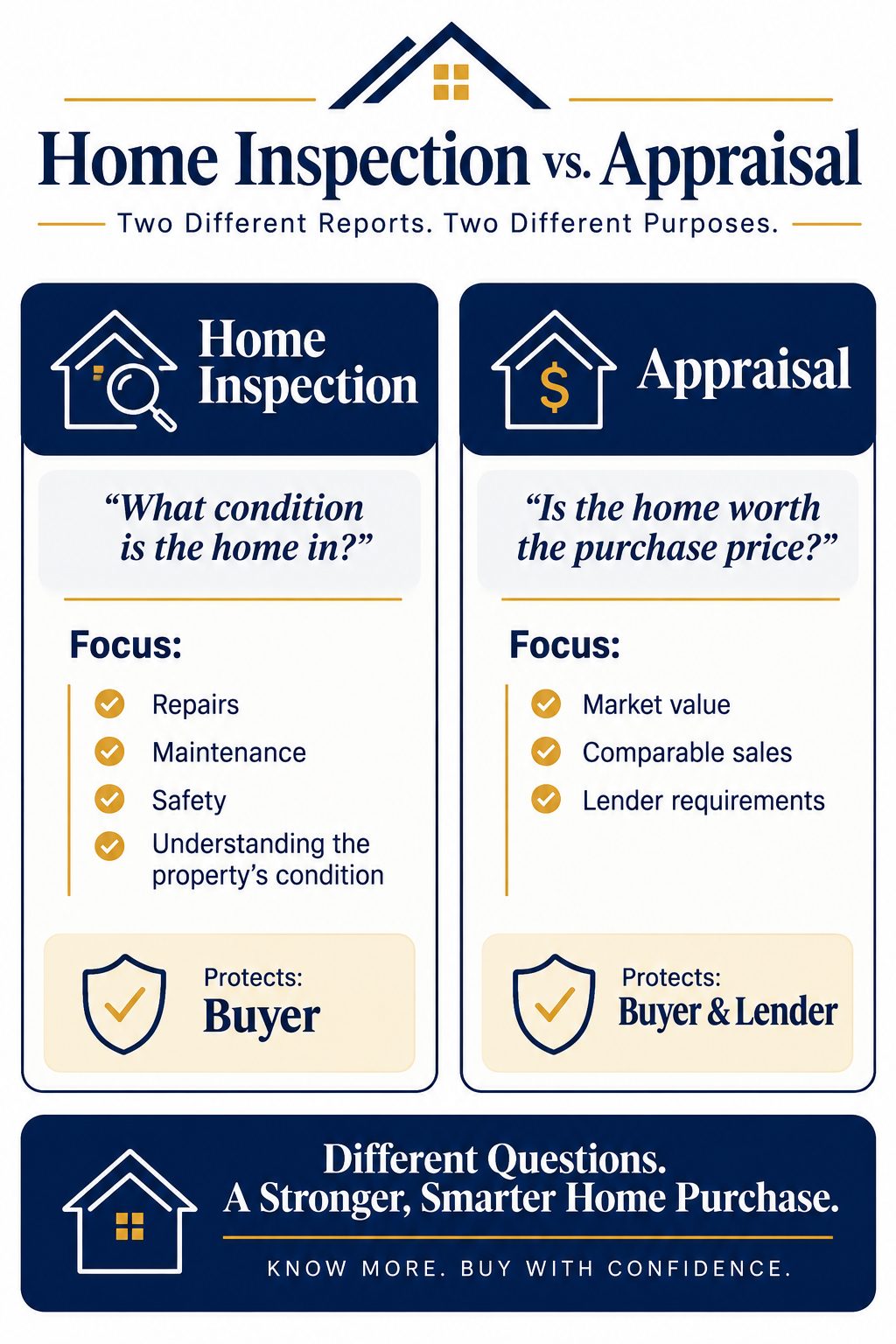
Inspection: Understanding the Condition of Your Future Home
Once your offer has been accepted, the inspection period is one of the most important steps in the home buying process. This is your opportunity to take a closer look at the home beyond what you can see during a showing and gain a better understanding of its overall condition.

A professional home inspector will evaluate the major systems, structure, and components of the property to identify potential concerns, safety issues, or areas that may require attention. The purpose of an inspection is not to find a “perfect” home, as every home will have some level of wear and maintenance needs if it is not a brand new construction, but rather to understand what you are purchasing and make an informed decision and be able to negotiate repairs or credit towards repairs if necessary before closing.

The inspection allows you to move forward with confidence by knowing the current condition of the property and understanding any potential future costs or repairs.

What Happens During the Inspection Process

Schedule a Professional Home Inspection
After your offer is accepted, we’ll help coordinate the inspection with a qualified professional within the first 10 days or less of your offer being accepted unless otherwise stated in our offer. During the inspection, the inspector will evaluate important areas of the home, including:

- Foundation and structural components
- Roof condition
- Electrical systems
- Plumbing systems
- Heating and cooling systems
- Windows, doors, and insulation
- Appliances and other major components

We always recommend that you attend the Inspection and Ask Questions.

Whenever possible, our buyers are encouraged to attend the inspection. This will be your future home and it gives you the opportunity to learn about the home directly from the inspector, ask questions, and better understand how different systems operate.

Review the Inspection Report
After the inspection, we will receive a detailed report outlining the inspector’s findings. We’ll review the report together, discuss any concerns, and determine the best next steps based on the information provided.

Understanding Inspection Findings
Not every item found during an inspection means there is a problem or that you should walk away from the home. Many findings are normal maintenance items that come with owning a property.

The purpose of the inspection is to help you understand:

- What repairs or updates may be needed.
- Which items are immediate concerns versus future maintenance.
- The potential costs associated with certain issues.
- Whether the home still aligns with your expectations and goals.

Depending on the results of the inspection and the terms of your contract, there may be opportunities to negotiate repairs, request credits, or make other decisions before moving forward.

Overview of Inspection: What to Expect During the Inspection Period
- Schedule a home inspection with a qualified inspector.
- Attend the inspection and ask questions.
- Review the inspection report and findings.
- Discuss options and determine the best path forward.
- Complete any additional inspections if needed.

Why It Matters
A home is one of the largest purchases you will make, and the inspection gives you important information before becoming the owner. It allows you to move forward with confidence, understand the condition of the property, and make decisions based on facts rather than assumptions.

My role is to help you understand the findings, navigate your options, and ensure you feel comfortable with your decision before moving toward closing.

Appraisal: Confirming the Home’s Value
After your offer is accepted, your lender will typically order an appraisal to determine the home’s current market value. While the inspection focuses on the condition of the home, the appraisal focuses on the value of the property.

A licensed appraiser evaluates the home and compares it to similar recently sold properties in the area to determine whether the purchase price reflects the home’s market value.

The appraisal is an important step because your lender wants to confirm that the property is worth the amount they are lending. This protects both you and the lender by ensuring the home’s value supports the purchase price.

What Happens During the Appraisal Process
The Appraiser Evaluates the Property
The appraiser will review factors such as:

- Location and neighborhood characteristics
- Size and layout of the home
- Condition and quality of improvements
- Features, upgrades, and amenities
- Recent comparable home sales

The Appraisal Report Is Completed
After evaluating the property, the appraiser prepares a report that is provided to your lender. This report includes the appraised value and supporting information used to determine that value.

Addressing Appraisal Concerns
Most appraisals move forward without issues, but occasionally the appraised value may come in lower than the agreed purchase price. If this happens, we will review the situation and discuss available options, which may include renegotiating terms, challenging the appraisal, or exploring other solutions.

Understanding the Difference Between Price and Value
The price of a home is the amount a buyer and seller agree to during negotiations. The value of a home is determined by market factors and comparable sales.

A seller may price a home at a certain amount, but the appraisal helps confirm whether that price is supported by current market data.

What to Expect During the Appraisal Process
- Your lender orders the appraisal.
- The appraiser reviews the home and comparable sales.
- The appraisal report is completed and sent to the lender.
- Any value concerns are addressed if they arise.

Why It Matters
The appraisal provides an additional layer of protection during the purchase process by confirming that the home’s value aligns with the agreed purchase price.

My role is to help you understand the appraisal process, prepare for possible outcomes, and guide you through any decisions that may come up as we move closer to closing.

A successful appraisal brings you one step closer to receiving the keys to your new home.


773a2c2c-fd21-40bd-84cf-7b2bcdafa42c

5. Final Loan Approval: The Final Step Before Closing

After your offer has been accepted, the inspection has been completed, and the appraisal has been finalized, your lender will begin the final review process to approve your mortgage. This step is often referred to as final loan approval or clear to close, and it confirms that everything is in place for you to move forward with purchasing your new home at closing day.

While your initial pre-approval helped you understand your buying power and allowed you to begin your home search, final loan approval is the lender’s official confirmation that your loan is ready to be completed.

During this stage, your lender will review your financial information, verify that all required documentation has been provided, and confirm that the property meets the lender’s requirements.

Understanding the Difference Between Pre-Approval and Final Loan Approval
Pre-Approval:
Your lender reviews your financial information upfront to determine how much you may qualify to borrow. This allows you to confidently begin searching for homes and shows sellers you are a serious buyer.

Final Loan Approval:
After you have selected a home and your offer is accepted, your lender completes a more detailed review of your finances, the property, and all loan requirements before giving the final approval to close.

Think of pre-approval as the starting point that gets you into the home search, and your offer accepted, while final loan approval is the final confirmation that allows you to go to settlement and become the homeowner.

What Happens During Final Loan Approval
Provide Any Additional Documentation Requested by Your Lender. Your lender may request updated documents or additional information before approving your loan. This is a normal part of the mortgage process and helps ensure all information is accurate and complete.

Common requests may include:

- Updated pay stubs or income verification
- Bank statements
- Proof of insurance
- Explanations regarding certain financial transactions
- Any additional paperwork required for your specific loan program
- Responding quickly to lender requests helps keep the process moving and prevents unnecessary delays.

Maintain Financial Stability During This Stage
One of the most important things buyers can do after going under contract is maintain consistency with their finances until closing.

Avoid making major financial changes, such as:

- Opening new credit cards or taking on additional debt
- Making large purchases
- Changing jobs without discussing it with your lender
- Moving large amounts of money between accounts without documentation
- Even small financial changes can impact your loan approval, so it’s important to communicate with your lender before making decisions that could affect your financial picture.

Receive Final Approval and Closing Details
Once your lender has completed the review process and all requirements have been satisfied, you will receive final loan approval. Your lender will then provide important closing information, including final loan terms, documents, and instructions for completing your purchase.

At this point, you are one step closer to officially becoming a homeowner.

What to Expect During Final Loan Approval
- Continue communicating with your lender and respond quickly to requests.
- Provide any updated documentation needed.
- Avoid major financial changes before closing.
- Review your final loan details.
- Receive confirmation that you are cleared to move forward with closing.

Why It Matters
Final loan approval is a critical milestone because it confirms that your financing is ready and your purchase can move forward. Staying organized, maintaining communication, and following your lender’s guidance helps create a smoother closing process.

My role is to help you stay informed throughout this stage, coordinatewith your lender and other professionals involved, and make sure you know what to expect as we move closer to closing day.

With final loan approval complete, you are one step closer to receivingthe keys to your new home.

Image 7-27-26 at 4.56 PM

5. Closing Day & Moving In

Closing Day: The Day You Officially Become a Homeowner
Closing day is the final step in your home buying journey, the day ownership officially transfers from the seller to you. After weeks of searching, negotiating, inspections, paperwork, and preparation, this is the moment when your home purchase becomes official.

While closing day is exciting, it is also an important legal and financial process. During closing, all remaining documents are reviewed and signed, your mortgage is finalized, funds are transferred, and the property ownership is officially recorded.

Once everything is complete, you’ll receive confirmation that the home is officially yours and you can receive the keys to your new property.

What Happens on Closing Day
Complete Your Final Walkthrough
Before signing your closing documents, you will typically complete a final walkthrough of the home. This is your opportunity to make sure the property is in the expected condition and that any agreed-upon repairs or items included in the sale have been completed.

During the walkthrough, we’ll confirm that:

The home is in the condition agreed upon in the contract.
Any requested repairs have been completed.
Included appliances, fixtures, and personal property remain in the home.
No unexpected issues have occurred since your last visit.

The final walkthrough is not a home inspection, it is simply a final check to make sure everything is ready for ownership transfer.

Review and Sign Closing Documents
At closing, you will meet with the appropriate professionals to complete the required paperwork. These documents finalize your mortgage, transfer ownership, and officially complete the purchase.

Documents may include:

- Final loan documents.
- The deed transferring ownership.
- Closing disclosures outlining final costs and terms.
- Additional paperwork required to complete the transaction.

Your closing agent will guide you through the documents and explain what you are signing. It is important to take your time, ask questions, and make sure you understand each document before signing.

Receive Your Keys and Officially Become a Homeowner
Once all documents are signed, funds have been transferred, and thetransaction has been recorded, the home officially belongs to you.

This is the moment you have been working toward, you receive the keys and begin your journey as a homeowner.

What to Expect on Closing Day
- Complete your final walkthrough of the property.
- Bring any required identification or documents.
- Review and sign final paperwork.
- Confirm final closing costs and loan details.
- Receive your keys once the transaction is complete.
- Begin your transition into your new home.

Why It Matters
Closing day represents more than signing paperwork, it represents the completion of your home buying journey and the beginning of a new chapter.

My role is to help you stay prepared, understand what is happening at each stage, and ensure the process feels organized and stress-free asyou move from buyer to homeowner.

Congratulations—your new home is officially yours!

Move In: Welcome Home
Congratulations, you’re officially a homeowner! After closing, the next exciting chapter begins: making your new house feel like home!

Whether you are moving in right away, completing renovations, or slowly settling into the space, this is the time to personalize your home and create a place that reflects your lifestyle.

Homeownership is not just about the transaction, it is about building a space where you can create memories, establish roots, and enjoy the benefits of owning a place that is truly yours.

What to Expect After Closing
Update Your Information
Before moving in, you’ll want to make sure your new home is ready for daily life. This may include:

- Transferring or setting up electricity, water, gas, and internet services.
- Updating your mailing address with the postal service.
- Updating your address with banks, insurance providers, employers, and other important accounts.
- Reviewing your homeowner’s insurance policy and coverage.

Taking care of these details early helps make your transition into the home much smoother.

Plan Your Move and Settle Into Your New Space
Moving into a new home is exciting, but it also comes with many details to organize. Creating a plan can make the transition easier.

Things To Consider:

- Scheduling movers or arranging transportation if need be for closing day.
- Planning furniture placement before moving larger items.
- Changing locks or updating security systems.
- Learning where important systems are located, such as water shut-off valves, electrical panels, and HVAC controls.
- Creating a maintenance plan to protect your investment.

Your home will continue to evolve as you settle in and make it your own.

Celebrate This Exciting Milestone
Buying a home is a major accomplishment and deserves to be celebrated. Take time to enjoy the moment, whether it’s hosting friends and family for your first house warming party, decorating your first space, or for your first holiday, or simply enjoying the feeling of having a place to call your own. You deserve it! Enjoy it!

IMG_9005
youtube-video-thumbnail

The Power of Partnership

Below is our preferred mortgage lenders and they provide the best mortgage experience possible, featuring incredibly low rates, fantastic customer service and a fast, simple process. Connect with my preferred mortgage lenders below to experience the difference for yourself.

My Trusted Lender

Mortgage Basics: Understanding Your Home Loan Options

Buying a home is one of the biggest financial decisions you will make, and understanding your mortgage options is an important part of the process.

Many buyers assume the only thing that matters is the interest rate, but your mortgage choice can impact much more than your monthly payment. Your loan program can affect:

  • How much money you need upfront
  • Your monthly payment
  • Your ability to qualify
  • Your long-term costs
  • How much flexibility you have when purchasing a home

The right mortgage strategy depends on your goals. Some buyers want to minimize their upfront costs, some want the lowest monthly payment possible, and others want to maximize their purchasing power.

Below are some of the most common mortgage programs buyers use today.


Conventional Loans

A conventional loan is one of the most common mortgage options available and is not insured or guaranteed by the government. These loans are typically offered through private lenders and follow guidelines established by organizations like Fannie Mae and Freddie Mac.

Who May Benefit From a Conventional Loan?

Conventional loans are often a great fit for buyers who have:

  • Strong credit history
  • Stable income
  • Consistent employment
  • The ability to contribute toward a down payment

Potential Benefits:

✓ Down payments can be as low as 3% for eligible buyers
✓ Flexible options for first-time and repeat buyers
✓ Can avoid mortgage insurance once enough equity is built
✓ May offer competitive interest rates for qualified borrowers

Things to Consider:

  • Credit requirements can be stricter than some government-backed loans
  • Buyers with smaller down payments may have private mortgage insurance (PMI)

FHA Loans

An FHA loan is a government-backed mortgage designed to help makehomeownership more accessible, especially for buyers who may not have a largedown payment saved or who may need more flexible qualification guidelines.

Who May Benefit From an FHA Loan?

FHA loans may be a good option for buyers who:

  • Have a smaller down payment
  • Are building their credit history
  • Want more flexible qualification options

Potential Benefits:

✓ Down payments as low as 3.5% for eligible buyers
✓ More flexible credit guidelines compared to some conventional loans
✓ Can be combined with certain assistance programs
✓ May help buyers enter the market sooner

Things to Consider:

  • FHA loans include mortgage insurance requirements
  • Property requirements may be more specific than some conventional loans

VA Loans

A VA loan is a mortgage option available to eligible veterans, active-dutymilitary members, and certain members of the National Guard, Reserves, and surviving spouses.

These loans are backed by the U.S. Department of Veterans Affairs andare designed to provide benefits to those who have served.

Potential Benefits:

✓ May allow eligible buyers to purchase with no down payment
✓ No monthly private mortgage insurance (PMI) requirement
✓ Competitive financing options
✓ Flexible qualification benefits

Things to Consider:

  • Eligibility requirements must be met
  • Buyers should work with a lender experienced in VA financing

USDA Loans

A USDA loan is a government-backed mortgage designed to help eligiblebuyers purchase homes in qualifying rural and suburban areas.

Many buyers are surprised to learn that USDA programs are not limitedto farms or remote locations. Many communities qualify depending on population size and program guidelines.

Potential Benefits:

✓ May offer no down payment options for eligible buyers
✓ Can make homeownership more accessible in qualifying areas
✓ Competitive financing options

Things to Consider:

  • Income limits apply
  • The property must meet location eligibility requirements

Fixed-Rate Mortgages

A fixed-rate mortgage means your interest rate stays the same for the entire term of your loan.

Common loan terms include:

  • 15-year mortgages
  • 20-year mortgages
  • 30-year mortgages

Benefits:

✓ Predictable monthly payments
✓ Easier long-term budgeting
✓ Protection from future interest rate increases

Best Fit For Buyers Who:

  • Plan to stay in their home long-term
  • Prefer payment stability
  • Want predictable housing costs

Adjustable-Rate Mortgages (ARM)

An adjustable-rate mortgage has an interest rate that can change after an initial fixed period.

For example:

  • A 5/1 ARM has a fixed rate for the first five years, then adjusts annually based on market conditions.

Potential Benefits:

✓ May offer a lower initial interest rate
✓ Can be useful for buyers who plan to move or refinance before adjustments occur
✓ May increase purchasing flexibility

Things to Consider:

  • Monthly payments can increase if rates adjust upward
  • Buyers should understand how and when adjustments occur

Best Fit For Buyers Who:

  • Expect changes in their housing plans
  • Want a lower initial payment
  • Understand the future adjustment risks

Choosing the Right Mortgage Is About More Than the Interest Rate

The lowest interest rate does not always mean the best mortgage option. The right loan depends on your complete financial picture.

When evaluating your options, consider:

💰 How much money do you want to bring to closing?

📉 Is your priority lowering your monthly payment?

🏡 Are you trying to maximize your buying power?

📆 How long do you plan to own the home?

💵 Do you want to keep savings available after purchasing?

💵 Is this an investment property?


Combining Mortgage Programs With Assistance Options

Many buyers can combine certain mortgage programs with eligible down payment assistance or closing cost assistance programs.

For example, an eligible buyer may be able to pair:

  • A conventional loan with a low down payment option
  • FHA financing with available assistance programs
  • Specialty programs designed for qualifying buyers

The right combination can help reduce upfront costs, preserve savings, or make monthly payments more manageable depending on the buyer's priorities.


The Best Mortgage Is the One That Supports Your Goals

Every buyer's situation is different. The best loan program is the one that aligns with your financial goals, your comfort level, and your plans for the future.

Working with an experienced lending professional can help you compare options, understand the trade-offs, and create a financing strategy that fits your homeownership goals.

Coldwell Banker and Guaranteed Rate Affinity, LLC share common ownership and because of this relationship the brokerage may receive a financial or other benefit. You are not required to use Guaranteed Rate Affinity, LLC, Fidelis Mortgage, or Sierra Pacific Mortgage as a condition of purchase or sale of any real estate.
Equal Housing Lender | © Guaranteed Rate Affinity 2022 | NMLS ID 1598647 | NMLS Consumer Access | Licensing Information